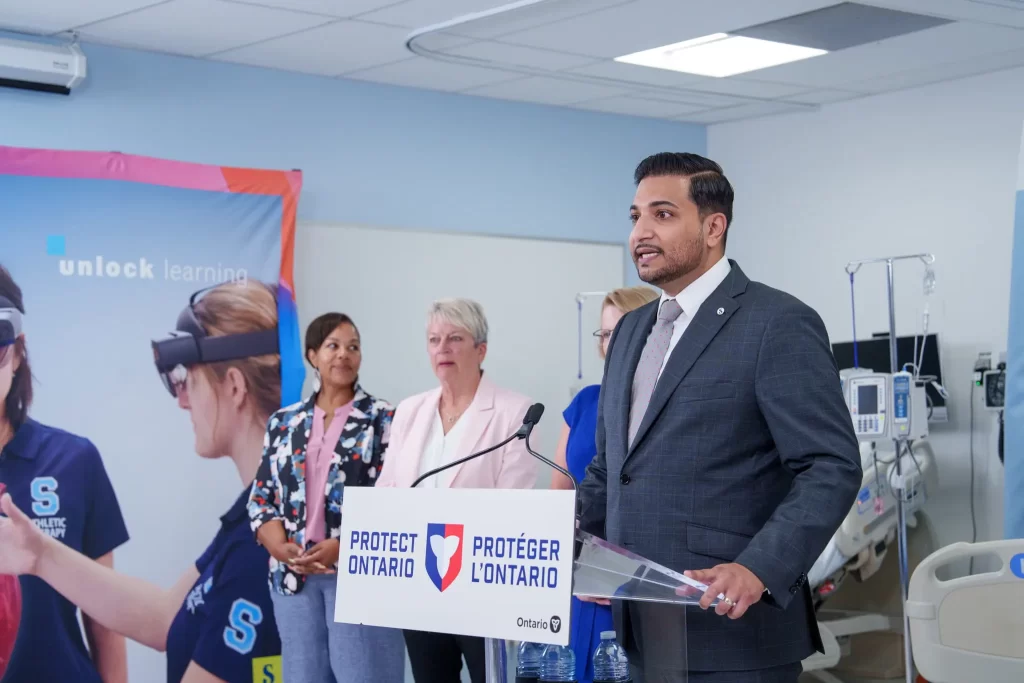
Sheridan’s to supporting healthy communities continues to grow with the expansion of its School of Nursing programs to accommodate nearly 150 more learners beginning this fall.
This one-year expansion of Sheridan’s Bachelor of Science – Nursing (BScN) degree (96 additional seats) and Practical Nursing diploma (48) is part of an announcement from the Government of Ontario made last week at Sheridan’s Davis Campus.
“Nurses are the lifeblood of healthcare systems throughout the world, and Sheridan is proud to be able to provide more learners with the opportunity to gain the skills, competencies and capacities required for sustained success in this demanding and vital role,” says Rajan Sandhu, Sheridan’s Interim President and Vice Chancellor. “This expansion also enhances Sheridan’s ongoing investment in healthcare education, which includes the recent introduction of degrees in nursing and osteopathy, growth of our Personal Support Worker program, and development of a new diagnostic imaging technology program. We are grateful for the support of our provincial government as we continue to invest in building a resilient and locally trained healthcare workforce to serve our communities.”
“Nurses are a vital part of Ontario’s health-care system, providing live-saving and compassionate care when patients need it most,” said Nolan Quinn, Minister of Colleges, Universities, Research Excellence and Security. “Our government continues to expand nursing enrollment in our colleges and universities and we’re proud to support Sheridan College’s School of Nursing programs so they can continue to equip students with the skills they need to strengthen our health-care workforce for generations to come.”
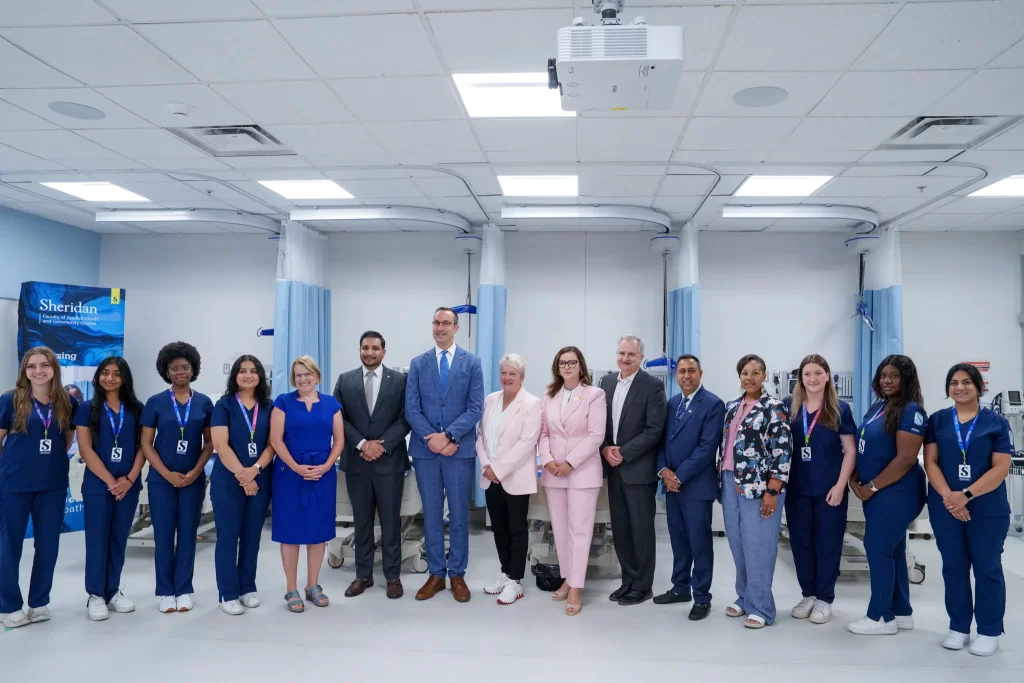
Launched in January 2024, Sheridan’s BScN degree reimagines nursing education through an intraprofessional approach that teaches entry-to-practice competencies required of both Registered Practical Nurses (RPNs) and Registered Nurses (RNs). Other unique features of the program include multiple consolidation placements; an emphasis on culturally-inclusive care practices; embedded certificates that are valued by employers and designed to reduce burnout; and the opportunity to receive a diploma after two years of studies, which enables students to write the College of Nurses of Ontario (CNO)’s Regulatory Exam – Practical Nurse (REx-PN) licensing exam and begin working as a regulated healthcare professional.