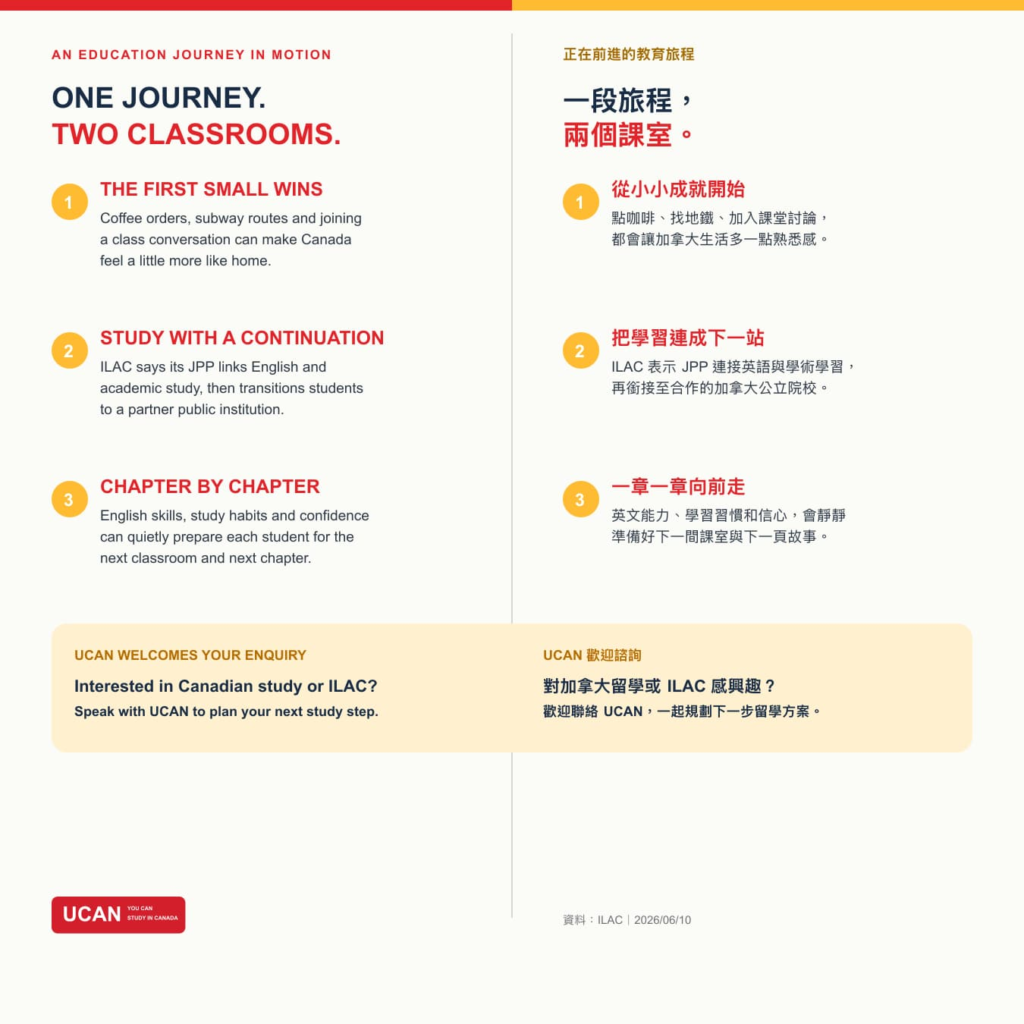
or many international students, the first week begins with small victories: ordering coffee without translating in your head, finding the right subway platform, or joining a class conversation before someone else answers. Yet behind those daily moments sits a bigger question: what comes after English studies? ILAC’s Joint Pathway Program, announced on June 10, connects its University Pathway Program with partner Canadian public colleges and universities. The idea is simple but meaningful—language learning and the next academic chapter are designed as one journey, not unrelated stops.
That changes the feeling of a weekday at language school. A presentation is no longer only a speaking exercise; it can become practice for the seminars and group projects waiting at the next campus. An essay draft becomes a rehearsal for a longer academic workload. ILAC says students begin in Toronto or Vancouver, build English and academic skills, and then move to a partner institution after completing the pathway and required bridging study. The current partners named by ILAC are Kwantlen Polytechnic University, Fanshawe College and George Brown Polytechnic, offering program choices across fields including business, technology, health, design and hospitality.
The human part of this news is the sense of continuity. Moving countries already asks students to learn new streets, new routines and new ways of speaking up; changing schools can add another layer of uncertainty. A structured pathway does not remove every assignment, deadline or nervous first-day introduction, but it gives the story a clearer rhythm: settle into English, gain confidence, then step into the next classroom with familiar study habits forming. For students imagining their own Canadian education story, the headline is not just about a program. It is about seeing a long plan as a sequence of manageable chapters, with each conversation and completed task quietly preparing the next page.