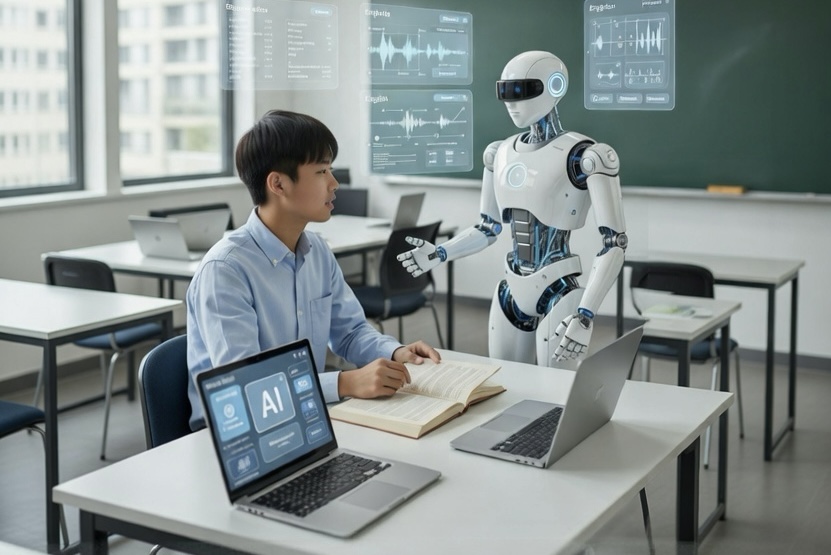
In today’s globalized education landscape, international students often face significant challenges with English proficiency, from academic writing and lectures to everyday conversations and presentations. Fortunately, artificial intelligence (AI) has emerged as a powerful ally, offering personalized, accessible, and effective tools to accelerate language improvement—far beyond traditional methods like textbooks or group classes.
One of the biggest advantages is personalized learning. AI platforms adapt in real-time to a student’s current level, strengths, and weaknesses. For instance, apps like Duolingo Max and ELSA Speak use AI to customize lessons, focusing on vocabulary, grammar, or pronunciation gaps. ELSA Speak, in particular, excels at oral practice by analyzing speech patterns and providing instant feedback on accent, intonation, and fluency—crucial for students preparing for university discussions or job interviews. Speaking confidence sees the most dramatic gains through AI chatbots and conversation simulators. Tools such as ChatGPT (with voice mode), Google Gemini, or specialized apps like FLOW Speak, Speak, and Loora allow unlimited, judgment-free practice. Students can simulate real-life scenarios—ordering food, debating topics, or rehearsing academic presentations—receiving immediate corrections on grammar, word choice, and natural phrasing. Research shows these interactive features reduce speaking anxiety, boost motivation through gamification, and lead to noticeable improvements in fluency and pronunciation.
For writing and academic English, Grammarly remains indispensable, offering real-time suggestions for grammar, style, clarity, and even tone adjustments in essays or emails. Combined with AI tools like Quillbot for paraphrasing or ChatGPT for brainstorming, students produce higher-quality assignments while building advanced vocabulary and structure.
Additionally, AI breaks down barriers with real-time translation (e.g., Google Translate or DeepL) and transcription, helping students follow lectures or participate in group work without constant reliance on dictionaries.Overall, AI makes English improvement flexible, affordable, and 24/7 available—perfect for busy international students balancing studies and adaptation to new cultures. By integrating these tools, learners not only meet language requirements faster but also gain long-term confidence for academic success and future careers in English-speaking environments. Embracing AI isn’t just smart—it’s essential for thriving abroad.