Students are building a fully automated city complete with AI, cryptocurrency, and autonomous driving vehiclesTwo people stand amongst a miniature city made of LEGO.
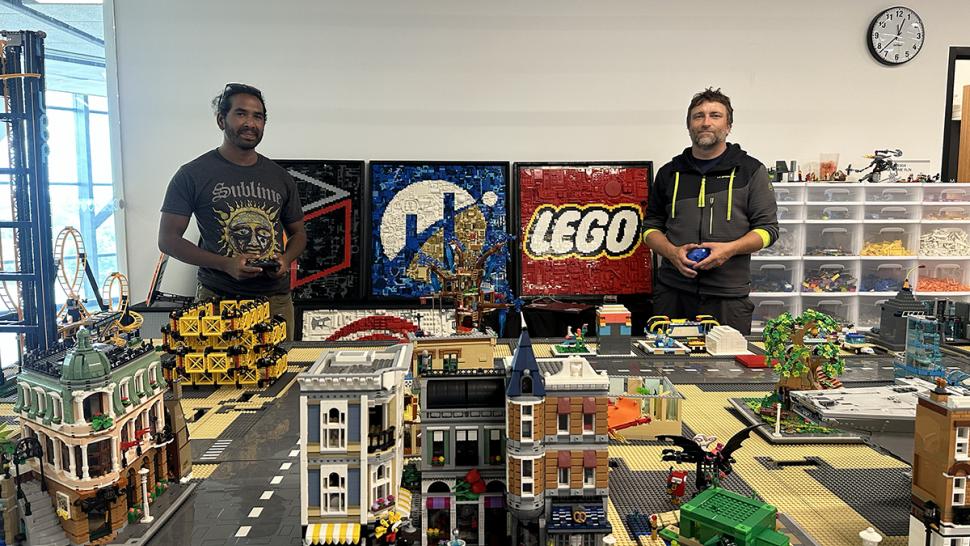
LEGO, the popular plastic building blocks, have been entertaining and educating children and youth for generations and Humber Polytechnic is continuing that proud tradition with the LEGO City project.
The project, which started a few years ago, is the first of its kind, says Humber professor Adam Thomas. Although there are other cities, the one located at the Barrett Centre for Technology Innovation is unique for how it’s being used in education.
Thomas was looking for a way to bring his Web Development program coding off the screen and into the real world. Thomas settled on robotics as it allows the students to grasp the fundamentals easier when they see it in real life.
“What I really like about the smart city project is that it forces students to solve existing problems using new solutions, not look up how it’s been done before,” said Thomas, adding the project involves contributions from students from 11 other Humber programs.
The students are building a variety of skills including front-end and back-end programming languages, Artificial Intelligence (AI) and Machine Leaning, the Internet of Things, application programming interfaces plus blockchain and cryptocurrency.
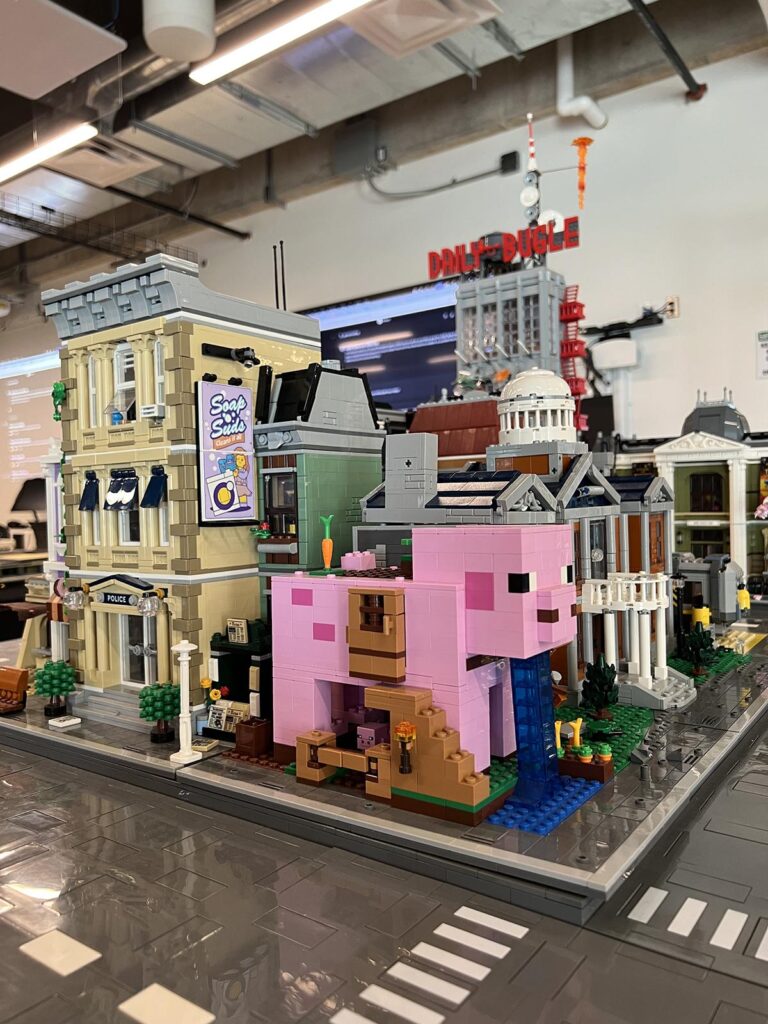
A physical city is being built using a range of LEGO kits – a smorgasbord that includes superheroes and fantasy realms set up next to each other. There is a functional GPS system hanging above the city, an AI generated radio station (called Lively) that reports on actual city traffic, and autonomous driving cars and trains. In the works is a cryptocurrency (called Loot) created by students that will provide the smart city with the tools to simulate an economy. Cars will be paid to deliver packages and charged to recharge their batteries or use the lifting bridge.