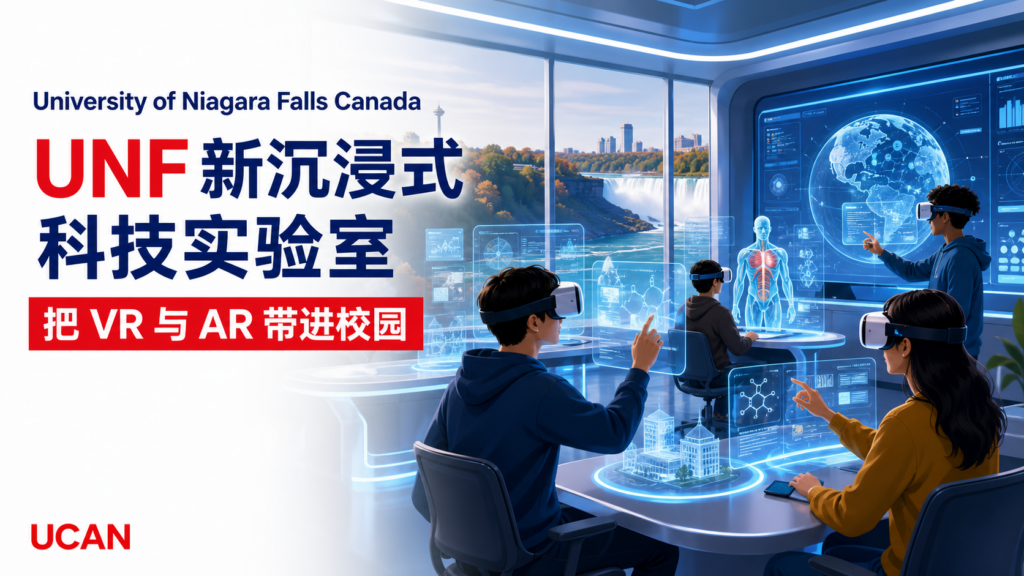
Virtual reality on a campus can be more than a display headset used during a tour. On July 17, the University of Niagara Falls Canada announced that its new VR Lab is open for course use, giving students a flexible space for virtual-reality and augmented-reality learning. The lab is the centrepiece of a completed 10,837-square-foot fourth-floor expansion that also adds upgraded high-tech classrooms, modern office and meeting areas, and a dedicated IT support desk.
The most useful detail for prospective students is how the room can be used. UNF says instructors can reconfigure it for individual VR stations, small-group AR projects or full-class demonstrations. The university gives in-depth anatomy exercises for bioscience students as one example, while its digital-media leadership describes the space as somewhere students can create and test immersive media rather than only study the concept. That suggests potential relevance across technology, communications, media and biosciences—but applicants should still ask how frequently their specific program and courses use the lab.
From a UCAN adviser’s perspective, facilities matter when they are tied to access and assignments. Before treating the lab as a reason to choose UNF, ask which courses currently book it, whether use is embedded in required classes or optional projects, what software and equipment students learn, and whether work created there can become part of a portfolio. Compare those answers with the facilities and project requirements at other institutions. International students should also verify current program availability, admission requirements, tuition and immigration-related rules through official sources. A new lab does not guarantee a particular project, internship or job; its value depends on how a student’s program actually uses it. Still, this expansion gives technology-focused families a much more concrete campus question to investigate.