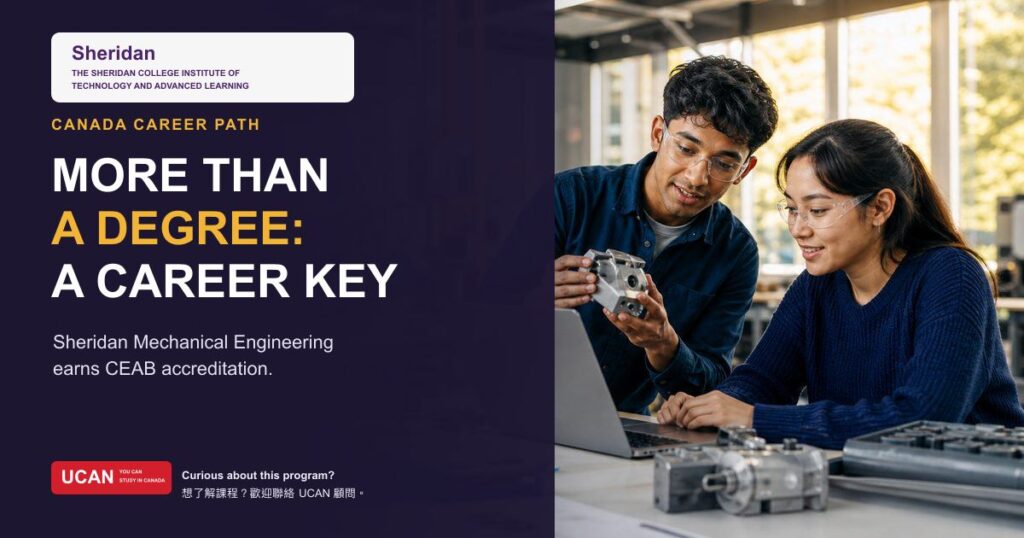
For an international student, choosing a program can feel a little like planning a long train journey: the campus brochure shows the first station, but you also need to know where the track leads after graduation. Sheridan College announced on July 2 that its Honours Bachelor of Engineering in Mechanical Engineering has received accreditation from the Canadian Engineering Accreditation Board, effective from the Class of 2026. In simple terms, this is more than a line on a website. It means graduates meet the academic requirement to begin the path toward professional engineering licensure in Canada. For students dreaming of designing machines, improving energy systems or working in advanced manufacturing, that recognition can make the next step feel far more concrete.
Life at college is not only lectures, late-night assignments and coffee before an early lab. Sheridan’s program combines smaller classes, project-based learning, industry-standard technology, a mandatory internship and an optional co-op placement. That combination matters because employers rarely hire a résumé alone; they look for people who can explain an idea, solve a real problem and work confidently with a team. Imagine discussing a prototype in a lab on Tuesday, then using that experience in an interview months later. For international students, these practical moments also create natural chances to practise professional English, meet mentors and understand how Canadian workplaces communicate.
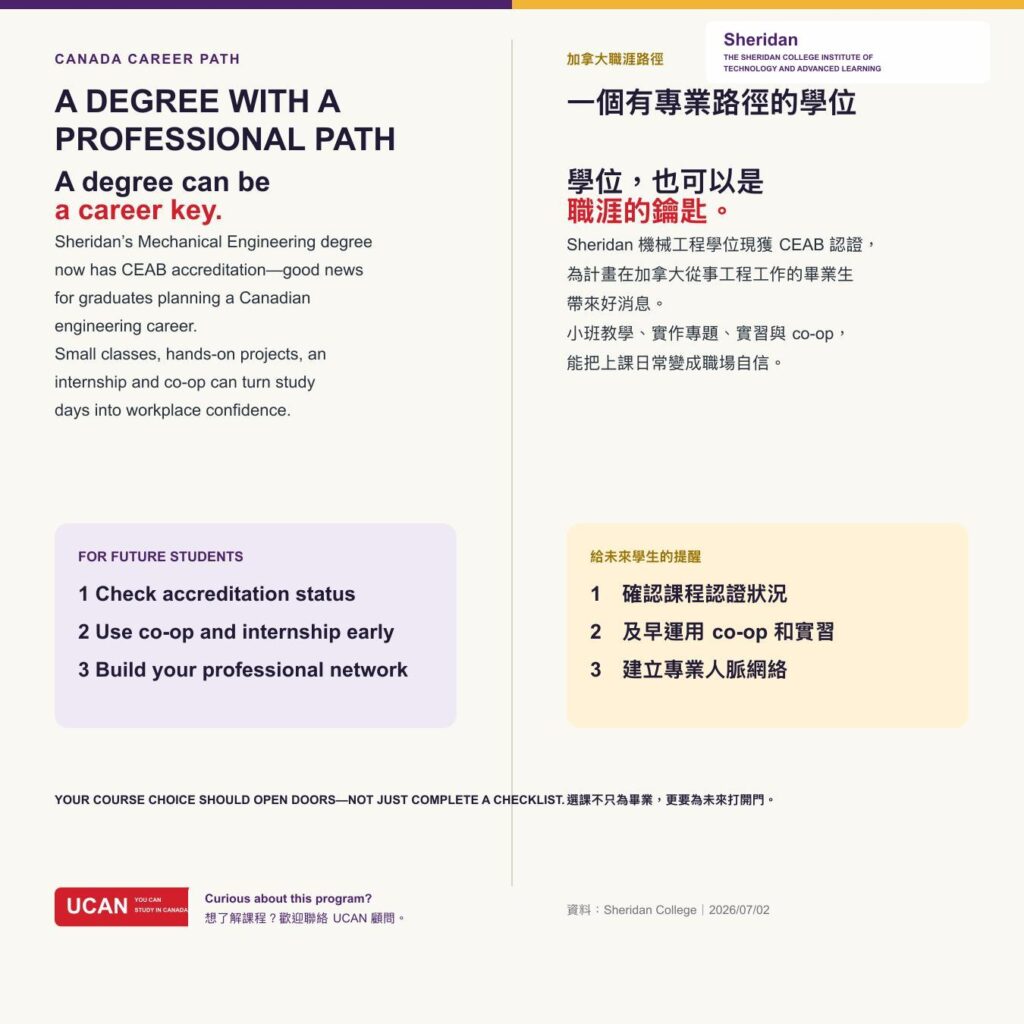
From a study-abroad adviser’s perspective, the news is a reminder to choose a program for its full journey, not just its admission letter. Accreditation is not a job offer, and P.Eng. licensing still involves later professional steps, but it gives a degree a clearer map toward regulated engineering work. Students should check a program’s accreditation status, ask how internships and co-op are structured, and begin building a professional network before graduation. Join a student club, speak with instructors, attend employer events and save project work in a portfolio. A strong Canadian education is not simply about crossing the stage at convocation; it is about leaving with skills, evidence and connections ready for the working world.