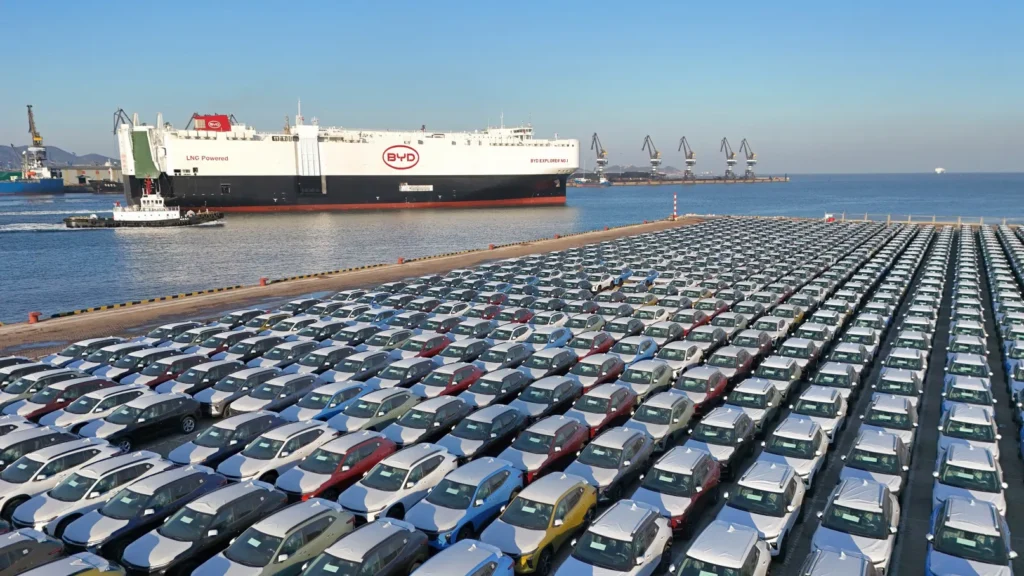
In a bold shift from prior U.S.-aligned policies, Canada’s recent agreement with China, announced during Prime Minister Mark Carney’s January 2026 Beijing visit, slashes tariffs on Chinese electric vehicles (EVs) from 100% to 6.1%, allowing an initial import cap of 49,000 units annually, rising to 70,000 over five years.
This move aims to boost EV affordability and foster investments, but it has ignited fierce debate over its impact on Canadian employment.Critics, including Ontario Premier Doug Ford and Unifor union president Lana Payne, warn of potential job losses in the auto sector.
They argue that subsidized Chinese EVs could flood the market, undermining domestic manufacturers and threatening thousands of assembly and supply chain jobs in provinces like Ontario, where the industry employs over 100,000 workers.
Ford called the deal “lopsided,” predicting it might jeopardize exports to the U.S., Canada’s largest market, leading to broader economic fallout.
Conversely, Carney emphasizes long-term gains, projecting “considerable” Chinese investments in Canada’s auto sector within three years, including joint ventures for EV manufacturing and supply chains.
This could create new jobs in assembly, battery production, and infrastructure, offsetting initial disruptions. With Canadians purchasing 1.8 million vehicles yearly, the imports represent under 3% of the market, potentially stimulating demand for EV-related services like charging stations and maintenance.
For recent graduates, the pact opens doors in high-demand fields. Students in electrical and mechanical engineering, battery technology, and sustainable energy programs stand to benefit from emerging roles in EV innovation and supply chain management.
Environmental science and business grads could thrive in green tech policy and logistics, as investments build a resilient EV ecosystem. While short-term risks loom, the agreement could ultimately enhance Canada’s competitiveness, blending imports with domestic growth to secure jobs in a transitioning economy.